

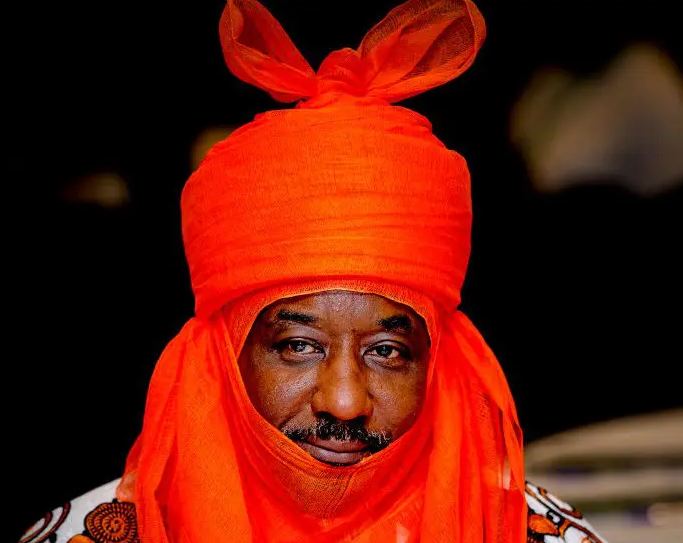
The Emir of Kano and former Governor of the Central Bank of Nigeria (CBN), Muhammad Sanusi II, has attributed Nigeria’s current economic difficulties to the country’s failure to remove fuel subsidy more than ten years ago.
Speaking at the Oxford Global Think Tank Leadership Conference on Tuesday, Sanusi explained that the delay in fuel subsidy removal has come at a great cost to the nation’s economy.
According to Sanusi, Nigeria’s struggle with inflation and rising living costs could have been avoided if the administration of former President Goodluck Jonathan had been allowed to end the fuel subsidy in 2011.
He noted that the political resistance to subsidy removal at the time has now resulted in far greater hardship for citizens and the economy.
Sanusi remarked that if the Jonathan administration had been permitted to eliminate the fuel subsidy back in 2011, Nigerians would have experienced some discomfort. “But that pain would have been a tiny fraction of what we are facing today. This is the price of delay.”
The former CBN governor revealed that, during his tenure, the apex bank conducted a detailed analysis of the likely effects of subsidy removal. The findings, he said, showed that inflation would have risen modestly but remained under control.
“At that time, we did the numbers in the Central Bank,” he said. “I stood up and put my credibility on the line. I said, remove the subsidy now—if inflation moves from 11 percent to 13 percent, I will bring it down within a year. We would never have reached 30-something percent inflation as we see today.”
Sanusi emphasized that maintaining the fuel subsidy for political reasons only postponed the inevitable and worsened the nation’s financial burden. He argued that the massive funds spent on subsidizing petrol could have been channeled into critical sectors such as education, healthcare, and infrastructure.
He also pointed out that successive governments failed to act decisively, allowing the economic imbalance to grow over time. The eventual removal of the subsidy in 2023, under President Bola Ahmed Tinubu, he said, was long overdue—but the consequences are now far more painful due to accumulated inefficiencies.
Economic analysts have long echoed Sanusi’s position, warning that Nigeria’s fuel subsidy system was unsustainable. The policy, while aimed at cushioning citizens from high fuel prices, drained government revenues and discouraged investment in local refining capacity.
Sanusi’s remarks reignite the debate on Nigeria’s fiscal discipline and policy timing. He urged policymakers to embrace bold economic reforms without fear of temporary discomfort, stressing that delayed decisions often result in greater long-term suffering for the population.
“We must learn as a country that economic reforms are not meant to please everyone immediately. If we had endured a little pain then, Nigeria would be in a much better position today,” Sanusi concluded.
The Emir’s comments have sparked renewed conversations among economists and citizens about how political short-sightedness and fear of public backlash have deepened Nigeria’s financial woes. With inflation above 30% and fuel prices soaring, many Nigerians are now experiencing the heavy cost of delayed reform.
Read More: Kabiru Tanimu Turaki Submits PDP Chairmanship Nomination Form as Lamido Faces Hurdles
Discover more from The Naija Post
Subscribe to get the latest posts sent to your email.